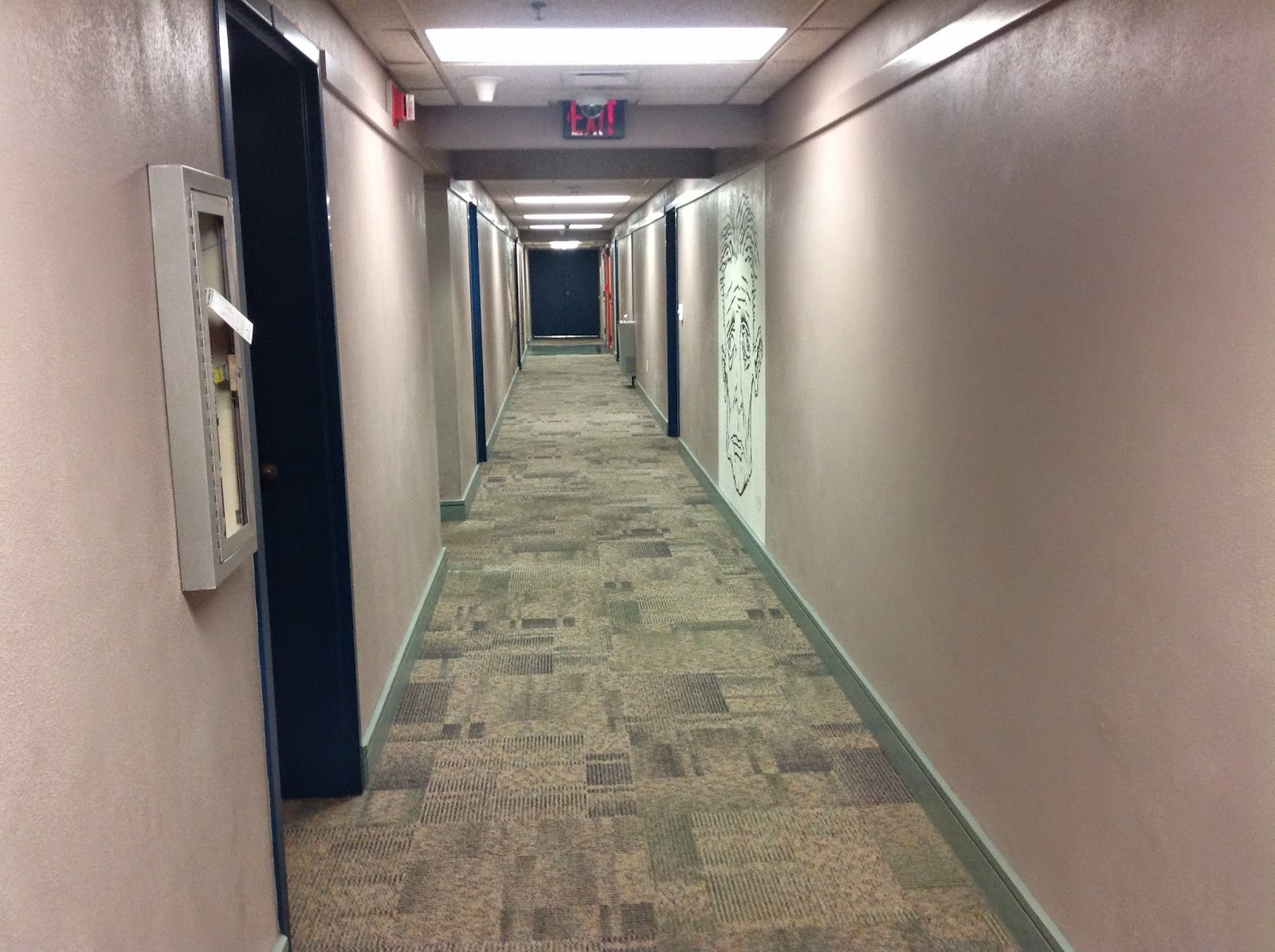
Last evening I went by McGill Hall to pick up the last of our possessions from the faculty apartment — McGill 107. It was a wonderful home. Patricia and I would spread out in the big comfy chairs in the evenings, typically sharing the ottoman. Each of the chairs could seat three students during our more popular events, like yearly chocolate tastings or graduation brunches, with plates of food scrunched together on the short wooden bar. On occasion I’d hold Sunday brunches, and depending on the year, a few students who went to bed at 5:00 am would get up at 7:00 am to have my breakfast casserole and blueberry coffee, joining the church goers. Whether attendance was large or small, and it varied widely with year, the conversations were a pleasure.
I remember great friend Will Clendening bounding across the living room at six am on a Saturday morning, towards the blueberry coffee in the kitchen, before a few of us went for a ride out to Liepers Fork — it was a ride Will would not return from. I sat in that living room talking to a recovering addict wanting to remain clean. Patricia and I played board games on the floor with students on Thanksgiving evening, and I watched the first performance of a one-act play that had been drafted a few hours before by the playwrights who came knocking late one night. Tornado warnings brought students to the first floor hall, and we’d open the door of 107 for coffee.
The big chairs were good seating for the music in the practice room down the hall — bag pipes, opera, piano, rock — over the year we heard the improvement, particularly in the rock bands. The parties in the McGill Lounge inevitably spilled out into the first floor hallway. We could hear every conversation that happened outside our door, but none I recall was particularly scandalous. The bedroom has a great thick door, and with the excellent foam earplugs from the library and the door closed, getting to sleep on even the noisiest of nights wasn’t a problem. Students would ask about the noise, wanting I think to keep the noise down, but I told them that any faculty member who had a problem with occasional loud sustained party noise probably shouldn’t be living in a student residence hall.
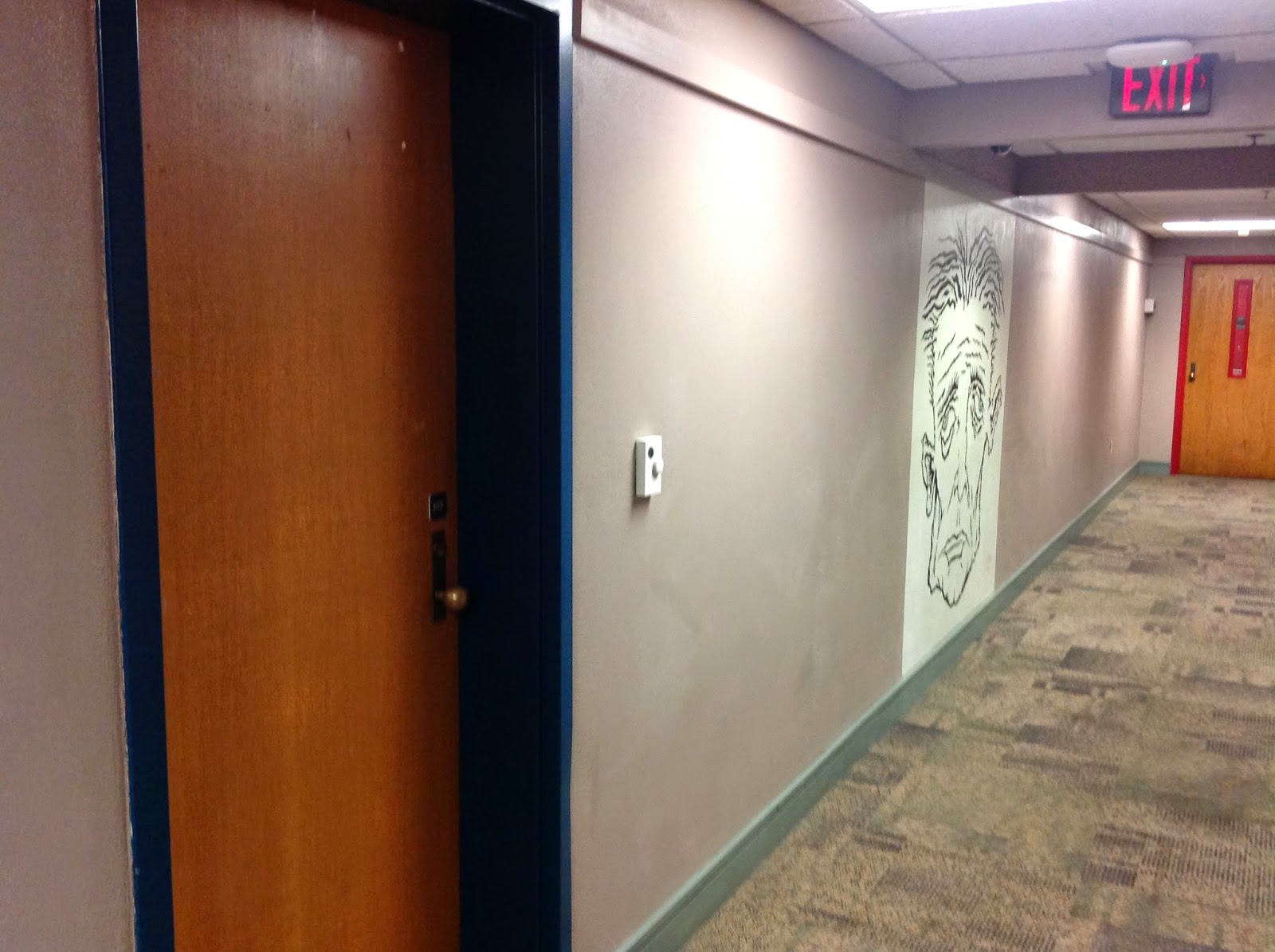
The McGill Coffee Houses in the lounge were wondrous, dark, and packed with students and sometimes resident life staff. While they were late in my day, which generally start before 5:00 am, Patricia and I would often go for the first hour — the talent in McGill was amazing, and includes much music, poetry and other spoken word, rap, and much else.
Each year since 2004, then a faculty member in residence at the “old Kissam”, I would do McGill Hours. I recall Professor Retzlaff, then McGill’s faculty member in residence, attending my first hour, surrounded by students, obviously comfortable. I also loved attending the McGill Hours of other faculty members (weekly presentations or facilitated discussions by faculty from across campus); Patricia too. In any year, there is a good chance that I attended more McGill Hours than any student (not a putdown), excepting my three years at NSF in Arlington, Virginia, and even then, I would look to see if any Hours were happening on my return trips to Nashville.
McGill has been good to me, and Patricia. Its been a great jumping off point to events after hours across campus — a faculty member in residence is first and foremost the faculty’s ambassador in the residence life of campus. And you can’t beat the commute. I’ve been proud to be a McGillite — they tend towards the fearless side, they stand up for what they believe, and they have each others backs — that’s my experience.
People have suggested that Faculty Director at Warren College is a big step up, by which most mean the Warren faculty apartment, I think, and it is an honor to have been selected, and now moved into an amazing residential space. But being a faculty member in residence at McGill, and before that at the old Kissam and North, but particularly at McGill, was a dream come true — as cool as it gets. I almost didn’t apply for College Halls — my lifestyle was that awesome, but I learned from NSF that its good to shake things up from time to time, and that’s what motivates this move — change, and I hope growth. And Patricia is thrilled by the new space, and her satisfaction is second to none. I love the space too of course, but the space isn’t why we choose this life on campus.
Bye for now, McGill!
Sunday, June 15, 2014
Tuesday, May 13, 2014
Election Day 2008
There was an excellent Frontline on tonight, Part 1 on NSA collection of US communications (http://www.pbs.org/wgbh/pages/frontline/united-states-of-secrets/). For reasons I won't elaborate now, it reminded me of Election Day 2008, a day of pride. I first posted this on an earlier blog site (November 8, 2008 at 1:25pm).
---
I spent last weekend, Nov 1 and 2, working on a big project. I took a break late Saturday morning to priority mail my ballot back to Nashville; I signed an oath, that among other things attested to my having filled the ballot out "in secret" -- I thought that was interesting. Priority mail cost me $4.80, but well spent, even though Nashville is solidly blue within a solidly red state -- hardly seemed that my vote would make a difference, except to me. By Sunday morning I knew that the project would turn out well, but it was going to take much of my Sunday too. I looked at my calendar and I had no appointments on Tuesday -- so I emailed my boss and asked for Tuesday off -- as Clint says, you've "got to know your limits", and not just to survive, but to remain civil. He blessed it, his second-in-charge blessed it, and I had myself what Julia Cameron calls an Artist's Date.
Tuesday, election day, I headed out to the National Archives, which friend Kurt had suggested. It was quiet in DC. I walked into the Archives behind a school group from Columbia, TN -- cute, and while the adults were getting them in some semblance of order, I jumped ahead. I imagined that the kids were going to head straight to the Rotunda, so I ducked into a side vault, and sure enough they passed right by, as did many others, all to return later :-) I was in a room with documents, maps, news, paintings on the American Revolution, with the most significant original document on display being the American copy of the Treaty of Paris (1784). I knew where it was before I got there, because group after group of school kids, tour guides leading the way, would stampede around me into the back, huddle around a case, and then stampede back on their way to another conquest. Like a lot of things, the star of the show wasn't the most interesting; a large 1775 map of the colonies showed no signs of Tennessee or Nashville -- just Virginia and Carolina extending westward, with indian tribes throughout and First Nations west of the Mississippi; on a 1796 map I found both "Tannessee" and Nashville; the Mohawks weren't happy with the 1784 Treaty of Paris, as it negated earlier assurances and (of course) they weren't parties to it. I'm part Iroquis BTW, of which the Mohawks were one tribe -- 1/32 in blood, but more like 1/3 in spirit. Vermont, where my mother grew up, and though it wasn't one of the original 13, had to get yanked back in line, after the Treaty was ratified, by George Washington himself.
I went to the Rotunda; as you enter there is an original 1297 Magna Carta -- Latin on animal skin :-), then you enter the main Rotunda, dark to preserve the Charters of Freedom, the ink on each faded beyond my ability to read them. Murals on the walls show the participants of the congresses that signed the Declaration of Independence and the Constitution, even those that didn't sign it -- you wonder why some wouldn't -- fear, principle, like George Mason? It's a beautiful and moving place.
The Public Vaults of the Archives have a lot of interactive exhibits -- some familiar stuff, but listening to Lyndon Johnson wear down Senator Richard Russell to serve on the Warren Commission (http://www.maryferrell.org/wiki/index.php/Formation_of_the_Warren_Commission ... last on the list of "LBJ Phone Calls") and JFK talking to Gov. Barnett of Mississippi over James Meredith's enrollment at Ole Miss (http://www.jfklibrary.org/meredith/chron_main.html) don't get old. Interactive exhibits involving great arguments and investigations from history (SC refusing to pay federal tax under Jackson, Titantic, UFOs, Kent State, Pumpkin Papers), while navigating the original documents, really intrigued the AIer in me. But personal stories -- soldiers, immigrants, Japanese-American internment -- this was the most touching, and this idea of archiving personal stories, or at least the information necessary to reconstruct the story, is something that resonates with so many -- you see the same theme at the Holocaust Museum, the American Indian Museum -- its an aspect of the "Memories for Life" UK grand challenge for computing research (http://www.ukcrc.org.uk/grand_challenges/current/index.cfm); I recall CMU CS researchers are empowering children in poor neighborhoods to record and archive the stories of their elders. At the Public Vaults I read that those that traveled overseas on passport would likely be there at the Archives, and I was reminded, I think, that my father had gone to the Archives to retrace his father's steps to Scotland to find his father (quite a tale there!) -- My father searched places like the National Archives, the Archives of the Latter Day Saints, the Scottish archives, old newspapers, 16 mm film, and more.. I'm 1/4 Scot by blood, and 1/2 in spirit BTW. I went with my father to Scotland a few months before he died, just after he'd put all the pieces of his history together -- its on computer and floppy that I can no longer (easily) read. Apparently, we are in a transition of great information loss with all this rapidly changing technology. But I have hardcopy :-)
When I got out of the Archives, I was far from done for the day -- lunch at National Galleries (the best Caesar dressing, real plates, good cup of Joe!), the East Building exhibit of George De Forest Brush (http://www.nga.gov/exhibitions/brushinfo.shtm), the Library of Congress on colleague Steve's recommendation (The Jefferson building is fantastically beautiful, and I'm sure that Madison's statue might induce swooning by those so inclined, but it will have to wait -- I was sure to get a library card, and I'm going back as a researcher -- I'll be able to count that trip as work! :-) I ended the day at Union Station, on the recommendation of friend Vivian -- quite a place. I'd been doing a lot of walking and was beat (it was an eight hour day), and was looking forward to a metro ride, but the Union Station Metro was a Zoo, and I hadn't had my flu shot, so I walked to Foggy Bottom, after dark, remembering some earlier times, talking to my wife on the phone about the election, which I hadn't thought of all day, but no news yet ... when I got back to Arlington I made a final check with my wife on the election, still not much, then headed up to the apartment. I zoned out in front of some DVD on my laptop in the kitchen -- no TV and no Internet and not good cell. I was in a twilight state, now in bed, about 11:00 PM when I heard hoots and hollers, honking horns, yells from the street 18 floors down and from other apartments I imagine -- what a wonderfully moving feeling that was, and I went to sleep.
Sunday, July 21, 2013
Copenhagen 2009
Originally posted May 30, 2009.
I just got back from Copenhagen, where I participated in the Organization for Economic Cooperation and Development (OECD) conference on Information and Communication Technology (ICT), Climate Change and the Environment. Last year I had been the only US government representative, and that had been a little scary, somewhat disappointing, and very cool – when they called on me for questions and comments they called on “United States” and before opening my mouth I reflected on what I was about to say :-). This year there were representatives from the State and Commerce Departments, and my (big) boss and I from NSF. I’m not revealing any secrets here – last year’s and this year’s are on the Web (http://en.itst.dk/the-governments-it-and-telecommunications-policy/green-it/conference-on-icts-the-environment-and-climate-change) -- more on this later and elsewhere.
I took the red-eye from Dulles to Copenhagen late Monday afternoon, arriving Tuesday morning Copenhagen time. I was on Scandinavian Airlines (SAS) and I like it – every seat its own little screen with on demand video and music, a salmon dinner with not-quite-spaetzle pasta and lima beans (!?) to die for, power outlets for laptops, and stuff I’m forgetting. I watched two movies, "The Curious Case of Benjamin Button" (on the way out) and "The Reader" on the way back, both of which I'd balked at when they were in theaters, but I liked them each, particularly Benjamin Button, which was especially moving.
I took the train from Copenhagen airport to downtown, stowed my big backpack in a locker, only keeping my government laptop around my shoulder for safekeeping. Last year I happened upon the National Gallery of Art just before having to return, and wanted to see it especially this trip, but in no rush, and in fact exhausted but with really no option but to stay awake for many more hours, so I walked.
Thus far in my experience there has been no singular global “Wow” image about Copenhagen – there has been nothing analogous to crowning a hill on a streetcar in San Francisco (Wow!), coming out of the tunnel overlooking Pittsburgh (Wow!), looking across Barcelona to Gaudi’s Sagrada Familia (Wow!) or vice versa from one of the Cathedral’s towers (http://www.greatbuildings.com/buildings/Sagrada_Familia.html), or gazing on the Chicago skyline from the Lake Michigan shore (Wow!). What I notice first about Copenhagen are bicycles – they are everywhere – Copenhagen is a commuter city, but very different from LA, which was my childhood territory. The parks, and I’ve only touched a few, are among the more local ‘wow’s that I’ve experienced -- I walked through two on my way to the National Gallery, Orstedsparken and Botanisk Have, then King’s Gardens afterwards.

Bikes outside the Copenhagen Train Station
At Orstedsparken I came across a statue that struck me personally, as I think it would have struck many other friends of recently departed Vivian C right now – an angel watching over a man who is not conscious of it, but he is being watched over nonetheless. The angel’s face is almost impossible to see in the shadows, and I was tempted to use the flash, which generally I think is much overused, but like the statues of Gandhi and Saint Jerome on Embassy Row in Washington, I think that the artistic vision is that the faces be hidden in shadow and you only see the detail to the extent that you look closely, and even then, you can’t see enough.
Whereas the Washington National Gallery’s West and East Buildings separate classic and modern art, the Danish National Gallery seems to have no such segregation – modern and classic art are side by side, organized by other themes. I was able to get a couple of shots illustrating the juxtaposition. In addition, many of its walls are packed with paintings, an organization principle that elicits a ‘wow’ but at the expense of seeing many of the details, at least from casual inspection.
After a full morning, I took the train down to Helsingor, a beach town where the conference was held, did some brief walking around, talked to the tourist center, then a public bus to my hotel, a spartan place a couple of miles inland. I really wanted to sleep, but there was a conference reception that I thought I should attend for professional reasons, I wanted to stay up as long as I could for a better adjustment to the time zone, and frankly I felt isolated and knew connecting would help, and it did help.
Kronberg Castle, Helsingor
The conference, in a nutshell, was focused on using information and communication technology (ICT) to reduce greenhouse gas (GHG) emissions due to humankind, and most notably what governments should do about promoting and supporting these efforts. There is great optimism that much can be done through virtualization (e.g., telework and conferencing with Web-based computer tools instead of the barbaric practice of flying cross country – yes, I recognize the irony :-), smart embedded systems (e.g., smart cars, smart buildings), which save energy through a large variety of computer-controlled mechanisms, and intelligent decision-making and planning systems that combine climate, economic and other social models. There is a lot of pushback though in implementing so much of this – for example, there are innumerable organizations that require that you keep your computer running 24/7 for reasons of “pushing” software and security upgrades, but my gosh, fixes to this should be 20 years old by now and the stupidity of designing such an energy-inefficient system is stunning -- it offends the engineer in me. I could go on and on with other forms of pushback and lack of awareness, and frankly, among other reactions, our failure to solve even simple, gross technological inefficiencies like the 24/7 computer-on policy has given me a certain sympathy for the disfunction that seems apparent in those trying to solve the planet's truly hard problems. I expect to be writing more on the topic of the conference. Generally, there is a lot that computer scientists and engineers can offer, both in terms of the products that they produce and in the ways that they think – my (big) boss Jeannette Wing has termed the latter “computational thinking”.
Just outside the Conference Center
It would have been fun having Pat with me to share the simple excitements and anticipations of a plane ride, train ride, castles, gardens, museums, and I hope that for next year as we are a good travel team, but next year I might be participating over the Web! So many decisions coming up, and even the “easy” ones can give me angst.
Full set of trip pictures at https://plus.google.com/photos/106374191437655932029/albums/5633851553719529281?banner=pwa
I just got back from Copenhagen, where I participated in the Organization for Economic Cooperation and Development (OECD) conference on Information and Communication Technology (ICT), Climate Change and the Environment. Last year I had been the only US government representative, and that had been a little scary, somewhat disappointing, and very cool – when they called on me for questions and comments they called on “United States” and before opening my mouth I reflected on what I was about to say :-). This year there were representatives from the State and Commerce Departments, and my (big) boss and I from NSF. I’m not revealing any secrets here – last year’s and this year’s are on the Web (http://en.itst.dk/the-governments-it-and-telecommunications-policy/green-it/conference-on-icts-the-environment-and-climate-change) -- more on this later and elsewhere.
I took the red-eye from Dulles to Copenhagen late Monday afternoon, arriving Tuesday morning Copenhagen time. I was on Scandinavian Airlines (SAS) and I like it – every seat its own little screen with on demand video and music, a salmon dinner with not-quite-spaetzle pasta and lima beans (!?) to die for, power outlets for laptops, and stuff I’m forgetting. I watched two movies, "The Curious Case of Benjamin Button" (on the way out) and "The Reader" on the way back, both of which I'd balked at when they were in theaters, but I liked them each, particularly Benjamin Button, which was especially moving.
I took the train from Copenhagen airport to downtown, stowed my big backpack in a locker, only keeping my government laptop around my shoulder for safekeeping. Last year I happened upon the National Gallery of Art just before having to return, and wanted to see it especially this trip, but in no rush, and in fact exhausted but with really no option but to stay awake for many more hours, so I walked.
Thus far in my experience there has been no singular global “Wow” image about Copenhagen – there has been nothing analogous to crowning a hill on a streetcar in San Francisco (Wow!), coming out of the tunnel overlooking Pittsburgh (Wow!), looking across Barcelona to Gaudi’s Sagrada Familia (Wow!) or vice versa from one of the Cathedral’s towers (http://www.greatbuildings.com/buildings/Sagrada_Familia.html), or gazing on the Chicago skyline from the Lake Michigan shore (Wow!). What I notice first about Copenhagen are bicycles – they are everywhere – Copenhagen is a commuter city, but very different from LA, which was my childhood territory. The parks, and I’ve only touched a few, are among the more local ‘wow’s that I’ve experienced -- I walked through two on my way to the National Gallery, Orstedsparken and Botanisk Have, then King’s Gardens afterwards.

Bikes outside the Copenhagen Train Station
At Orstedsparken I came across a statue that struck me personally, as I think it would have struck many other friends of recently departed Vivian C right now – an angel watching over a man who is not conscious of it, but he is being watched over nonetheless. The angel’s face is almost impossible to see in the shadows, and I was tempted to use the flash, which generally I think is much overused, but like the statues of Gandhi and Saint Jerome on Embassy Row in Washington, I think that the artistic vision is that the faces be hidden in shadow and you only see the detail to the extent that you look closely, and even then, you can’t see enough.
Whereas the Washington National Gallery’s West and East Buildings separate classic and modern art, the Danish National Gallery seems to have no such segregation – modern and classic art are side by side, organized by other themes. I was able to get a couple of shots illustrating the juxtaposition. In addition, many of its walls are packed with paintings, an organization principle that elicits a ‘wow’ but at the expense of seeing many of the details, at least from casual inspection.
After a full morning, I took the train down to Helsingor, a beach town where the conference was held, did some brief walking around, talked to the tourist center, then a public bus to my hotel, a spartan place a couple of miles inland. I really wanted to sleep, but there was a conference reception that I thought I should attend for professional reasons, I wanted to stay up as long as I could for a better adjustment to the time zone, and frankly I felt isolated and knew connecting would help, and it did help.
Kronberg Castle, Helsingor
The conference, in a nutshell, was focused on using information and communication technology (ICT) to reduce greenhouse gas (GHG) emissions due to humankind, and most notably what governments should do about promoting and supporting these efforts. There is great optimism that much can be done through virtualization (e.g., telework and conferencing with Web-based computer tools instead of the barbaric practice of flying cross country – yes, I recognize the irony :-), smart embedded systems (e.g., smart cars, smart buildings), which save energy through a large variety of computer-controlled mechanisms, and intelligent decision-making and planning systems that combine climate, economic and other social models. There is a lot of pushback though in implementing so much of this – for example, there are innumerable organizations that require that you keep your computer running 24/7 for reasons of “pushing” software and security upgrades, but my gosh, fixes to this should be 20 years old by now and the stupidity of designing such an energy-inefficient system is stunning -- it offends the engineer in me. I could go on and on with other forms of pushback and lack of awareness, and frankly, among other reactions, our failure to solve even simple, gross technological inefficiencies like the 24/7 computer-on policy has given me a certain sympathy for the disfunction that seems apparent in those trying to solve the planet's truly hard problems. I expect to be writing more on the topic of the conference. Generally, there is a lot that computer scientists and engineers can offer, both in terms of the products that they produce and in the ways that they think – my (big) boss Jeannette Wing has termed the latter “computational thinking”.
Just outside the Conference Center
It would have been fun having Pat with me to share the simple excitements and anticipations of a plane ride, train ride, castles, gardens, museums, and I hope that for next year as we are a good travel team, but next year I might be participating over the Web! So many decisions coming up, and even the “easy” ones can give me angst.
Full set of trip pictures at https://plus.google.com/photos/106374191437655932029/albums/5633851553719529281?banner=pwa
Sunday, June 2, 2013
Will ClenDening -- Artist and Engineer
The last time that I saw Will ClenDening was the morning of June 3, 2006 at about 9:30 AM. He, Mark, and an acquaintance of theirs from safety school had come to my McGill apartment on the Vanderbilt campus at about 6:00AM that Saturday. I had blueberry coffee waiting for them and Will walked in, breathed the aroma deep, and said “I don’t care what anyone says, I love this blueberry coffee.” In truth, virtually everyone does. We drank coffee, talked about motorcycles I’m sure, because the three of them were relatively new to riding, and headed to Green Hills to meet up with friends, who would follow us by car down Hillsboro Pike, cutting over on old TN-46 to Leipers Fork, where we planned on breakfast at Puckett’s. It was foggy and cool. I saw in my rear-view mirror our little caravan spread out during the 15 mile drive, disappearing in the curves, and reappearing after a time in the straight-aways – never out of sight for too long.
At Puckett’s we sat in the front and we looked out on “main street”. The fog had lifted and it was a bright day. We clowned around, jabbing each other with old jokes, and then caravanned again down Natchez Trace, heading towards Highway 100, where we planned to turn towards town. We pulled to the side, and said goodbye to our autoing companions. Mark, Will, and their friend wanted to continue on – it was a beautiful day, but I decided to head back to see friends, as originally planned. I left them there, Will to finish a smoke, and rounded the turn onto Hwy 100, but pulled into a gas station at the junction, south of the Loveless Hotel, and waited for my friends to leave from behind the ridge, take the same curve I had, but turn west. I waited, got off and paced, but never saw them take that turn, and left for Nashville after about 15 minutes.
At about Noon, Will’s friend Chris walked into lunch, pulled me aside, and told me that Will had died in a motorcycle wreck about an hour before. I was stunned, disbelieving for hours, until I talked to Mark, who had seen Will’s body pulled from under the van that hit him, through no fault of the van’s driver. I went to see Mark that evening, who was devastated – we talked about my feelings, his feelings, and projected how the driver felt. He explained what had happened, as best he could, for he had been riding ahead of Will. Days later, I met Will’s father at Fido’s coffee house, and he gave me a copy of the accident report. Will’s bike had laid down on a curve; Will, with bike, had slid across the centerline and been hit by an oncoming van; Will had died instantly.
Geoff, Mark, Chris, and I were pallbearers at Will’s funeral at modest St Mark’s, and I doubt that church had ever seen so many people. Will had an ocean of friends and other well-wishers, and they packed the sanctuary and auxiliary rooms to beyond capacity. Will was revered in several communities.
Two weeks after Will died, Mark and I rode to the accident site, coming from the opposite direction. I was surprised that it was a modest, harmless looking curve. I snapped pictures while Mark looked on absently. Before we left I rode down a mile, and then back the way that Will had come. The curve wasn’t banked, somewhat obscured by brush, following a prolonged straightaway. Riding it, I understood how easy it would be to slip in a way that I had not appreciated by looking.
Between White Bluff and Cumberland Furnace, TN. Looking West.
Will was an artist, but he was an engineer too – he was some wonderful melding of both artist and engineer (http://perambulating.blogspot.com/2006/06/will-clendening.html). When I asked my mother for her old defibrillator and pacemaker (http://www.vuse.vanderbilt.edu/~dfisher/good-deed.html), after her originals had been replaced, it was Will that I had in mind – excitedly we bantered about them as the basis of an artistic work. He asked me about computers too -- what was possible with them. He expressed an interest in adding computer programming and graphics to his artistic tool chest. Will wanted to somehow visualize the way that a computer processed text. He asked me how text was represented in a computer. I told him about ASCII binary codes, where each character (e.g., letter, digit, punctuation) is represented as 8 bits (1's and 0's) or 1 byte. He thought of using a light source to flash on and off, representing 1's and 0's, the ASCII representations of the sequence of characters that made up a text -- I think that we talked about doing this for the dictionary and some novel. We talked about this sequencing of flashing light being analogous to Morse code. I showed him a byte of memory (i.e., enough memory to store just a single CHARACTER of text) from an old, circa-1960 IBM 700-series computer. This REALLY excited him. This one byte was as big as small laptops of today that can store billions of bytes (or characters). It had 8 vacuum-tubes along the top, one for each bit. He imagined installing banks of 8-lights each (each light about the size of a Christmas light) in a dark room, and the banks of lights going off in rapid succession, perhaps with some parallelism, each bank representing a character of text. Perhaps visitors could type in text that would be translated to ASCII, byte representation and displayed. The basic idea of translating between representations or between modalities of perception was behind some of his other projects, like one in which bar codes were translated to audio.
Will and I shared art and engineering, and we were close friends … among that handful of “best” friends for which further ordinal distinctions make no sense. When he died I think I finally grokked that I was mortal.
At Puckett’s we sat in the front and we looked out on “main street”. The fog had lifted and it was a bright day. We clowned around, jabbing each other with old jokes, and then caravanned again down Natchez Trace, heading towards Highway 100, where we planned to turn towards town. We pulled to the side, and said goodbye to our autoing companions. Mark, Will, and their friend wanted to continue on – it was a beautiful day, but I decided to head back to see friends, as originally planned. I left them there, Will to finish a smoke, and rounded the turn onto Hwy 100, but pulled into a gas station at the junction, south of the Loveless Hotel, and waited for my friends to leave from behind the ridge, take the same curve I had, but turn west. I waited, got off and paced, but never saw them take that turn, and left for Nashville after about 15 minutes.
At about Noon, Will’s friend Chris walked into lunch, pulled me aside, and told me that Will had died in a motorcycle wreck about an hour before. I was stunned, disbelieving for hours, until I talked to Mark, who had seen Will’s body pulled from under the van that hit him, through no fault of the van’s driver. I went to see Mark that evening, who was devastated – we talked about my feelings, his feelings, and projected how the driver felt. He explained what had happened, as best he could, for he had been riding ahead of Will. Days later, I met Will’s father at Fido’s coffee house, and he gave me a copy of the accident report. Will’s bike had laid down on a curve; Will, with bike, had slid across the centerline and been hit by an oncoming van; Will had died instantly.
Geoff, Mark, Chris, and I were pallbearers at Will’s funeral at modest St Mark’s, and I doubt that church had ever seen so many people. Will had an ocean of friends and other well-wishers, and they packed the sanctuary and auxiliary rooms to beyond capacity. Will was revered in several communities.
Two weeks after Will died, Mark and I rode to the accident site, coming from the opposite direction. I was surprised that it was a modest, harmless looking curve. I snapped pictures while Mark looked on absently. Before we left I rode down a mile, and then back the way that Will had come. The curve wasn’t banked, somewhat obscured by brush, following a prolonged straightaway. Riding it, I understood how easy it would be to slip in a way that I had not appreciated by looking.
Between White Bluff and Cumberland Furnace, TN. Looking West.
Will was an artist, but he was an engineer too – he was some wonderful melding of both artist and engineer (http://perambulating.blogspot.com/2006/06/will-clendening.html). When I asked my mother for her old defibrillator and pacemaker (http://www.vuse.vanderbilt.edu/~dfisher/good-deed.html), after her originals had been replaced, it was Will that I had in mind – excitedly we bantered about them as the basis of an artistic work. He asked me about computers too -- what was possible with them. He expressed an interest in adding computer programming and graphics to his artistic tool chest. Will wanted to somehow visualize the way that a computer processed text. He asked me how text was represented in a computer. I told him about ASCII binary codes, where each character (e.g., letter, digit, punctuation) is represented as 8 bits (1's and 0's) or 1 byte. He thought of using a light source to flash on and off, representing 1's and 0's, the ASCII representations of the sequence of characters that made up a text -- I think that we talked about doing this for the dictionary and some novel. We talked about this sequencing of flashing light being analogous to Morse code. I showed him a byte of memory (i.e., enough memory to store just a single CHARACTER of text) from an old, circa-1960 IBM 700-series computer. This REALLY excited him. This one byte was as big as small laptops of today that can store billions of bytes (or characters). It had 8 vacuum-tubes along the top, one for each bit. He imagined installing banks of 8-lights each (each light about the size of a Christmas light) in a dark room, and the banks of lights going off in rapid succession, perhaps with some parallelism, each bank representing a character of text. Perhaps visitors could type in text that would be translated to ASCII, byte representation and displayed. The basic idea of translating between representations or between modalities of perception was behind some of his other projects, like one in which bar codes were translated to audio.
Will and I shared art and engineering, and we were close friends … among that handful of “best” friends for which further ordinal distinctions make no sense. When he died I think I finally grokked that I was mortal.
Sunday, May 26, 2013
Van Carpenter of Glendora, California
Vanderbilt moved its blogging platform, deleting the old content, and rather than move with it, I am going with Blogger, convinced that if Google is so committed to collecting all the data there is to collect in the World, they won't throw out their own history of data! I am re-posting some content here, as well as new content. This was originally posted May 31, 2009 -- it seemed the right choice for the inaugural post.
----
I hiked the National Mall in DC today, taking a weekend break from NSF. I got off the Metro at Foggy Bottom, walked through the southern edge of GW University, past the State Department, to the Lincoln Memorial, the Vietnam and Korean War Memorials, then the WW II Memorial, and on to the National Galleries. I thought about friends along the way. One of them, Van Carpenter, died during the Summer of 1972. He was 15. Van was not a close friend, but the first of many to precede me. He was on a family fishing trip to Mexico, as I recall. Van and John Kelly, also our age, had taken a car out. They struck an electrical power pole, they were barefoot, the power line had fallen onto the car, and when they stepped out on the driver and passenger sides, each holding the body of the car, they were electrocuted.
I bought my first sports coat, slacks, tie, etc with my mother at the family run clothing store, Andrews, on Glendora Ave – main street in our town, for Van’s funeral. I remember the salesman running suggestions by my mom and I.
I don’t remember the funeral itself – I just have vague impressions. In fact, I have only one rock solid memory of Van’s actual person. He and I were on the 9th grade track team of Sandburg Junior High School – the B team, and we ran the 1320 (feet) or ¾ mile – 3 quarter-mile laps. During the last home race with cross town rival Goddard, about half way through the last lap, with Van ahead of me and a Goddard guy in the lead, I heard Coach (Victor) Hurd (aka “Victor Mature” aka “Give-me-20-Fisher!”) yell from across the field, at the finish line, “GOOOOooooo Fisherrrr!!!”. At the last turn, I kicked, and I passed Van, but he responded and he was in my peripheral vision the rest of the race, and we both passed the Goddard guy. I won by a hair that day, Van was second. It’s certainly a good feeling. But sometime after that race, and as I recall, after Van died, my mother talked with Van’s mother (in fact, I think that they were sitting in the stands together during the race), Van’s mother said that Van told her “If I couldn’t win, then I’m glad Doug did”. I remember taking this as an expression of personal liking rather than as a generic gladness that a teammate had won, and I recall being mildly surprised by it. Anyways, that felt good too.
Van’s mother also told my mom that Van had not gone to see Love Story, a 1970 movie of love and loss, with the family because he was afraid that he would cry (and presumably someone might see him). He would have been 13, maybe 14. Boy, do I understand that. Still, I recall being surprised by his sensitivity and his honesty. Van might have been one of my first lessons on not knowing what was in someone’s heart, though I can’t say that I was conscious of it.
I didn't grok the sentiment of a "young life cut short" when I was 15, but I grok it now. Several years ago I looked for some record of Van on the Web and couldn’t find him. I can’t find him today. I found the “Goddard guy”, later a high school classmate, just now, quite easily.
Van Carpenter of Glendora, California
----
I hiked the National Mall in DC today, taking a weekend break from NSF. I got off the Metro at Foggy Bottom, walked through the southern edge of GW University, past the State Department, to the Lincoln Memorial, the Vietnam and Korean War Memorials, then the WW II Memorial, and on to the National Galleries. I thought about friends along the way. One of them, Van Carpenter, died during the Summer of 1972. He was 15. Van was not a close friend, but the first of many to precede me. He was on a family fishing trip to Mexico, as I recall. Van and John Kelly, also our age, had taken a car out. They struck an electrical power pole, they were barefoot, the power line had fallen onto the car, and when they stepped out on the driver and passenger sides, each holding the body of the car, they were electrocuted.
I bought my first sports coat, slacks, tie, etc with my mother at the family run clothing store, Andrews, on Glendora Ave – main street in our town, for Van’s funeral. I remember the salesman running suggestions by my mom and I.
I don’t remember the funeral itself – I just have vague impressions. In fact, I have only one rock solid memory of Van’s actual person. He and I were on the 9th grade track team of Sandburg Junior High School – the B team, and we ran the 1320 (feet) or ¾ mile – 3 quarter-mile laps. During the last home race with cross town rival Goddard, about half way through the last lap, with Van ahead of me and a Goddard guy in the lead, I heard Coach (Victor) Hurd (aka “Victor Mature” aka “Give-me-20-Fisher!”) yell from across the field, at the finish line, “GOOOOooooo Fisherrrr!!!”. At the last turn, I kicked, and I passed Van, but he responded and he was in my peripheral vision the rest of the race, and we both passed the Goddard guy. I won by a hair that day, Van was second. It’s certainly a good feeling. But sometime after that race, and as I recall, after Van died, my mother talked with Van’s mother (in fact, I think that they were sitting in the stands together during the race), Van’s mother said that Van told her “If I couldn’t win, then I’m glad Doug did”. I remember taking this as an expression of personal liking rather than as a generic gladness that a teammate had won, and I recall being mildly surprised by it. Anyways, that felt good too.
Van’s mother also told my mom that Van had not gone to see Love Story, a 1970 movie of love and loss, with the family because he was afraid that he would cry (and presumably someone might see him). He would have been 13, maybe 14. Boy, do I understand that. Still, I recall being surprised by his sensitivity and his honesty. Van might have been one of my first lessons on not knowing what was in someone’s heart, though I can’t say that I was conscious of it.
I didn't grok the sentiment of a "young life cut short" when I was 15, but I grok it now. Several years ago I looked for some record of Van on the Web and couldn’t find him. I can’t find him today. I found the “Goddard guy”, later a high school classmate, just now, quite easily.
Van Carpenter of Glendora, California
Subscribe to:
Comments (Atom)